

Meiping
Period
1970-1985
About this matchbox
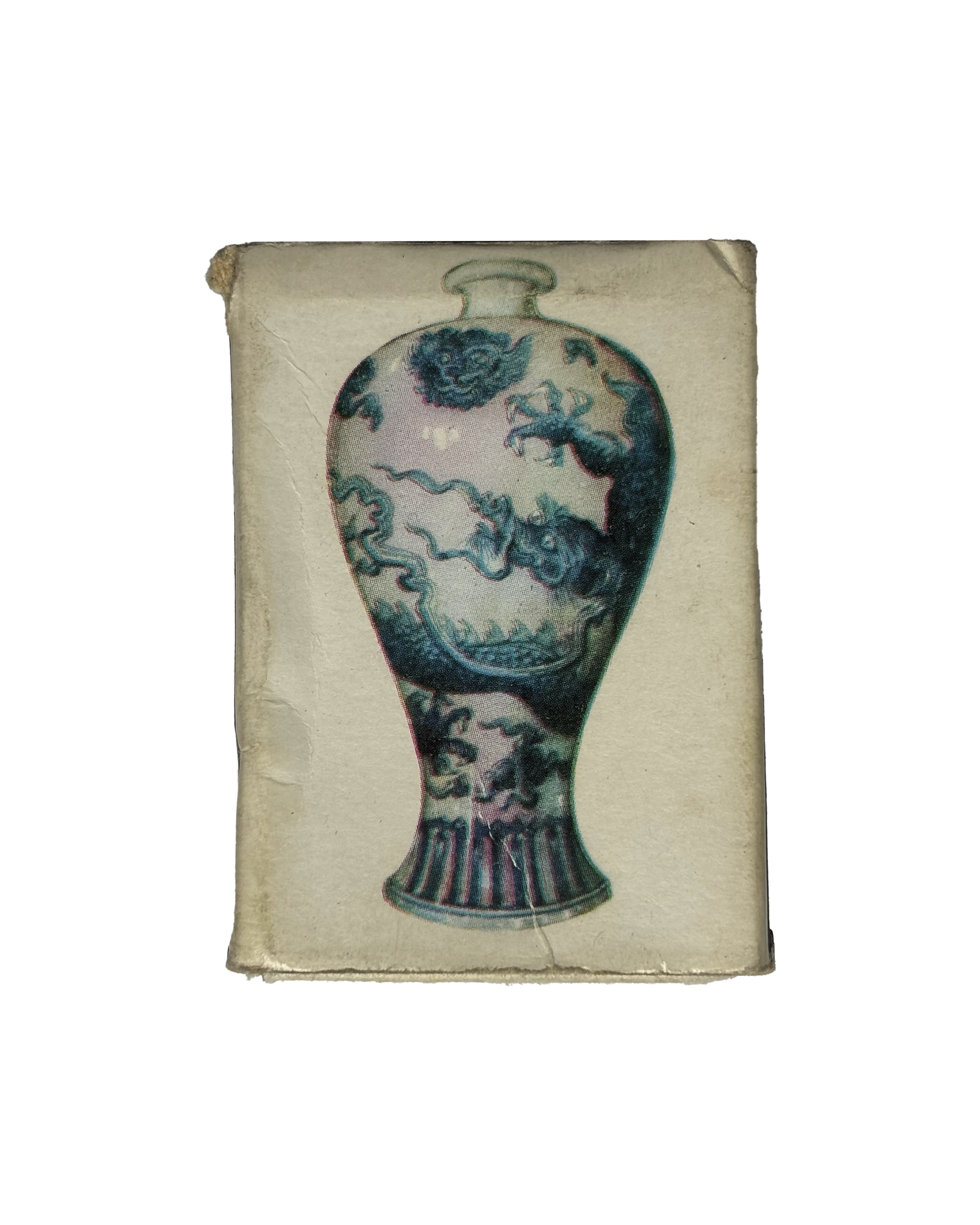
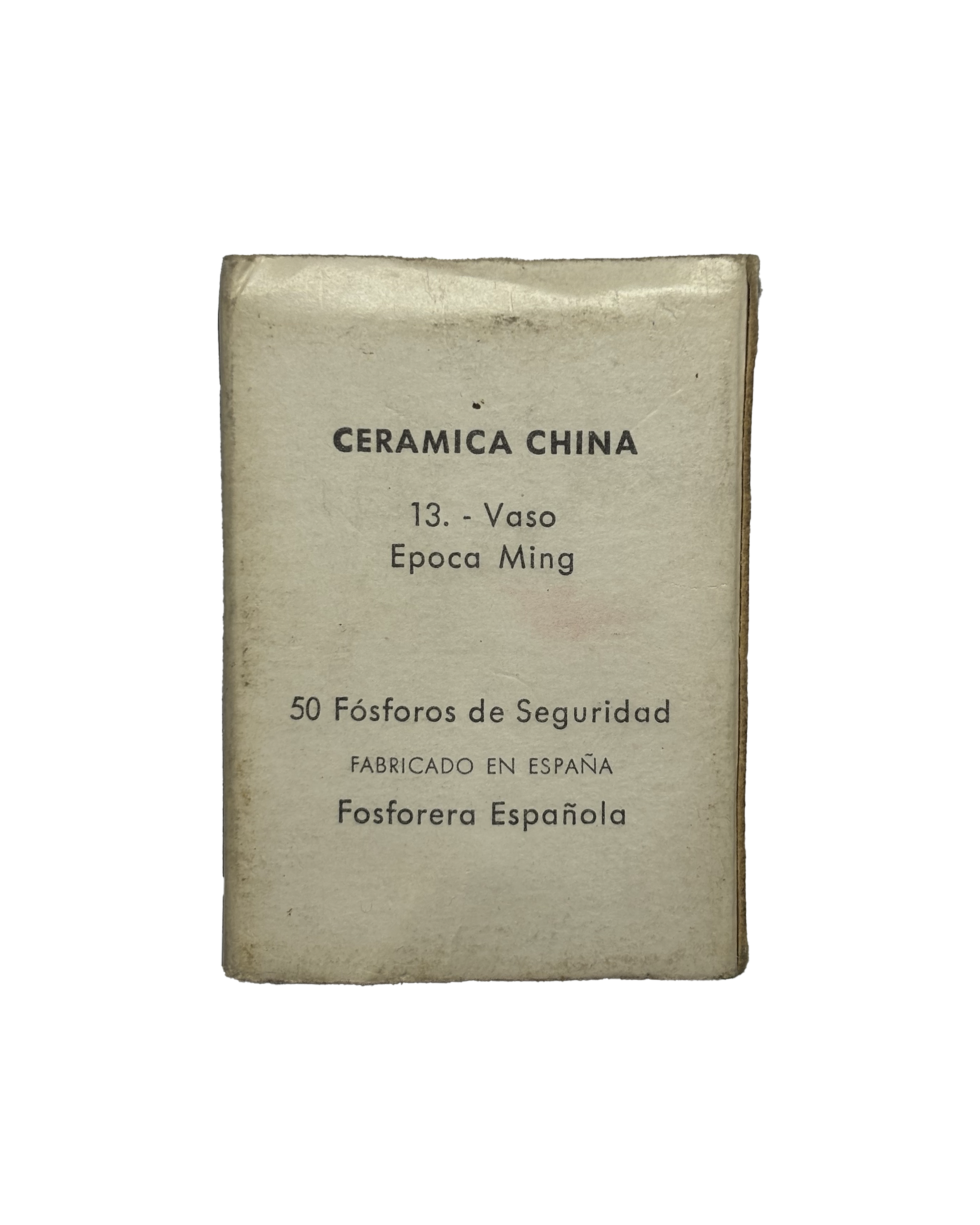
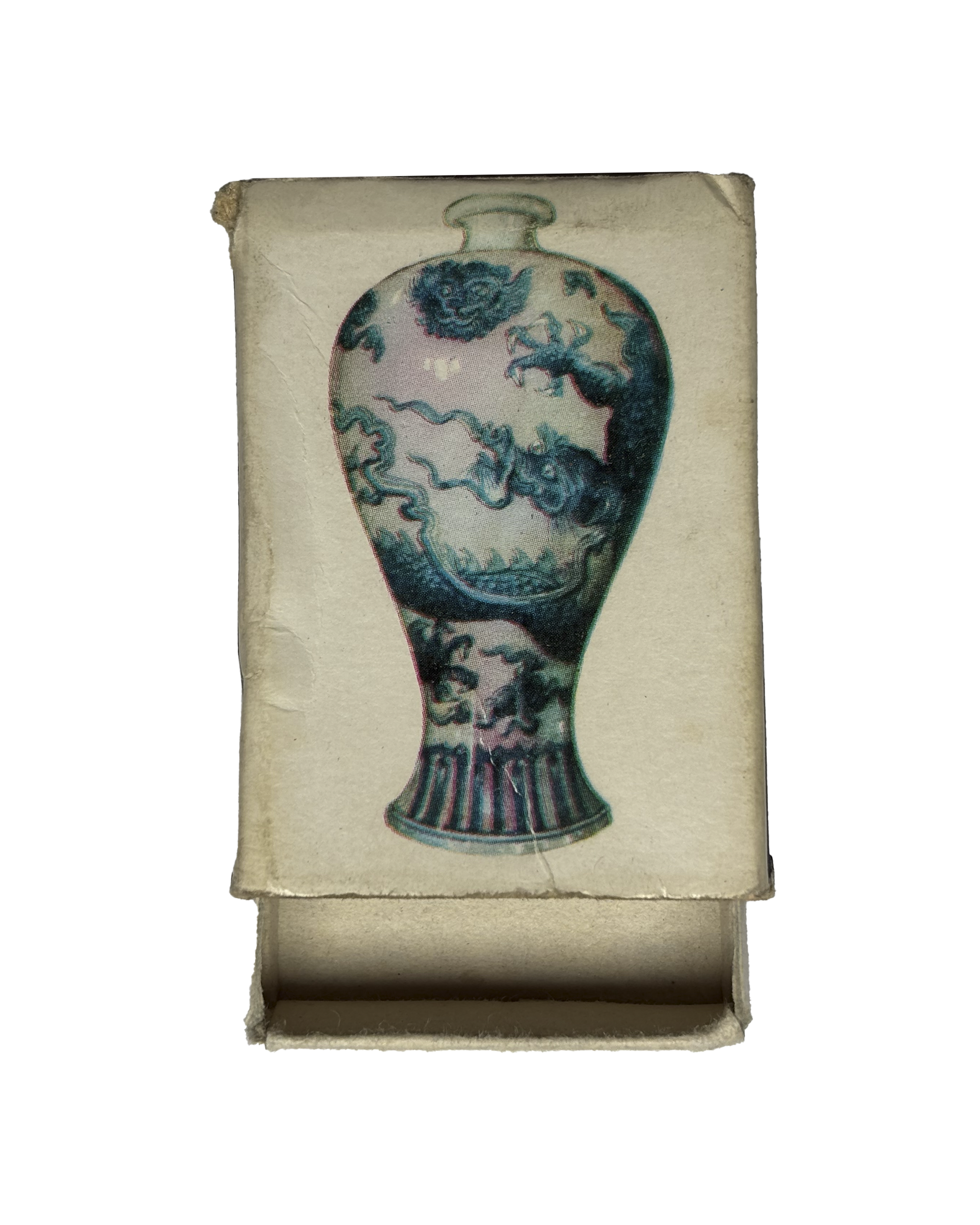
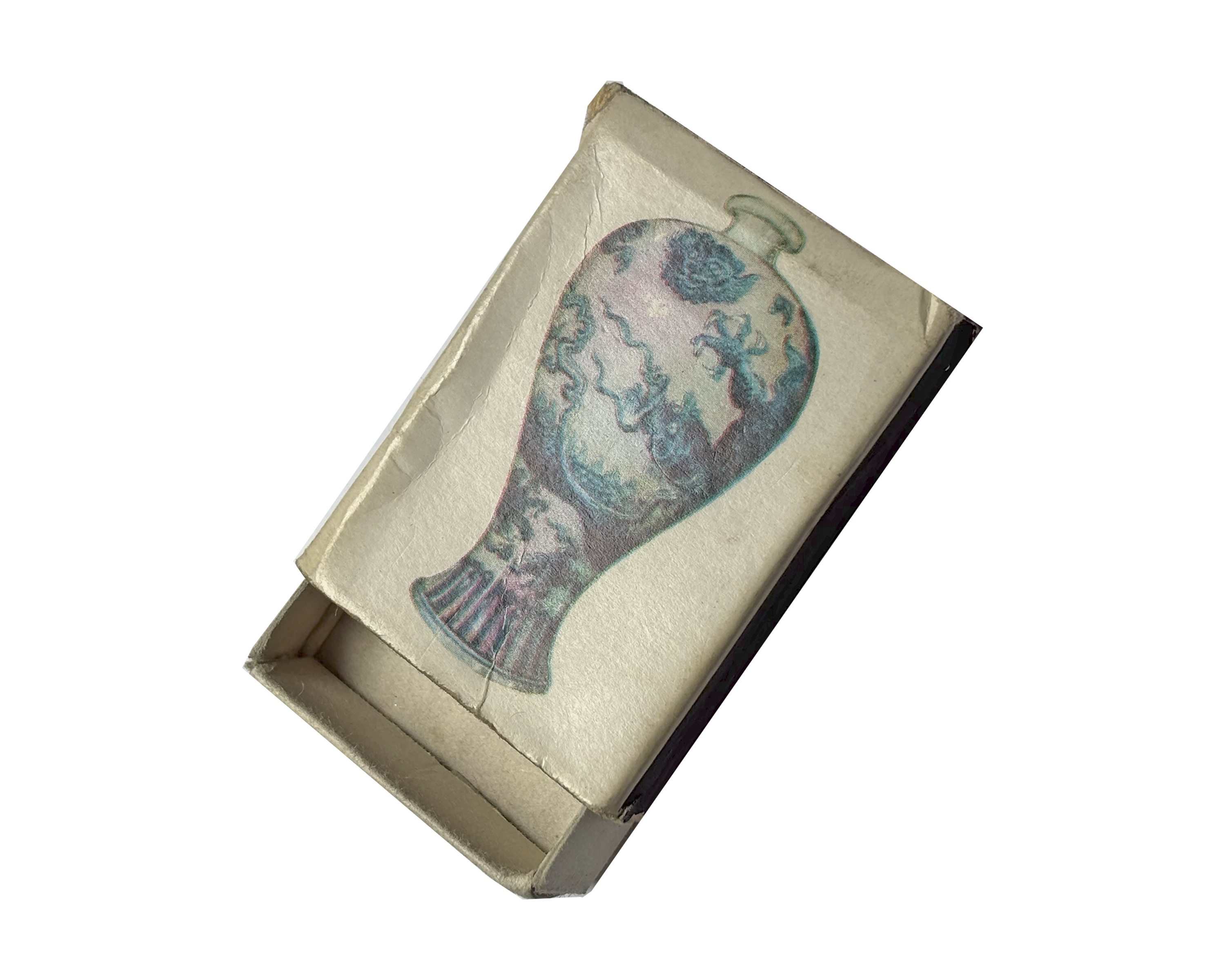
This box belongs to a series by Fosforera Española based on Chinese ceramics, in this case, No. 13 referring to a vase from the Ming era. There are more series based on ceramics from other countries. Coincidentally, I have two pieces from this collection, and I will soon show you the other one. Meanwhile, let me tell you:
This type of vases/jars are called Meiping, which literally means plum blossom vase. It comes from 梅 (méi) = plum or plum blossom and 瓶 (píng) = vase, bottle, or jar. Its characteristic shape with a narrow base, a body that widens, a short neck, and a small mouth is designed to hold a single branch of plum blossom. This plant holds great symbolism in Chinese culture as it blooms in the middle of winter, representing perseverance, resilience in the face of adversity, and hope.
The vase in the drawing corresponds to a real piece from the Nelson-Atkins and is cataloged as an authentic Ming porcelain, specifically from the Xuande period, which is also one of the most prestigious and coveted periods in the entire history of Chinese porcelain.
During the Ming dynasty (1368-1644), Jingdezhen became the true "world capital of porcelain". Thousands of specialized artisans worked there: some prepared the paste, others molded the pieces, others painted the motifs, and others controlled the kilns. The production was so sophisticated that a single piece could pass through dozens of hands before being completed.
The characteristic blue color of Ming vases was not just any paint. It was obtained from cobalt, a highly prized mineral that, during the early years of the dynasty, was imported from Persia, although later cobalt mines began to be exploited in China. After firing the piece at over 1,300 °C, the blue acquired that intensity that still identifies Chinese porcelain today.
In the drawing of the vase, we can observe a five-clawed dragon, a symbol reserved for the emperor and representing power, authority, and good fortune. Four-clawed dragons were usually for princes or high-ranking members of the imperial family, while the three-clawed one was used in pieces for nobles, export, or more general use. However, this rule was not always absolutely strict. It depended on the period, and there are exceptions.
Research clues
/ 03